






If you sell on Amazon, you’ve probably heard sellers argue about A+ Content vs Premium A+ Content like it’s a debate about pizza toppings — everyone has an opinion, but few actually explain the real difference in a way that helps you make a decision. So let’s clear the air.
Both tools exist to do one thing: turn a boring, text-heavy product listing into something that actually makes a shopper stop scrolling. But they’re not the same tool, they don’t cost the same effort to access, and they definitely don’t deliver the same results. If you’re trying to figure out which one is right for your brand — or whether you even need Premium A+ Content — this guide breaks it down without the jargon.
What Is Amazon A+ Content?
Amazon A+ Content (formerly known as Enhanced Brand Content) is a free feature available to sellers enrolled in Amazon Brand Registry. It lets you replace the plain paragraph-style product description with a visually rich layout — think lifestyle images, comparison charts, banners, and short blocks of persuasive copy.
Instead of forcing customers to read through dense bullet points, A+ Content lets you tell a visual story about your product: how it’s used, what makes it different, and why it’s worth buying. Most sellers get access to around 5 modules to mix and match images and text blocks, with image widths capped at roughly 970 pixels.
It’s essentially the entry-level version of enhanced product storytelling on Amazon, and it’s genuinely effective. Brands that add standard A+ Content typically report better engagement and fewer returns, simply because customers understand the product better before they buy.
What Is Premium A+ Content (A++ Content)?
Premium A+ Content — sometimes still called A++ Content — is the upgraded, more advanced version of the same idea. Where standard A+ Content gives you static images and text blocks, Premium A+ Content adds interactive elements: full-width video modules, image carousels, hover-based hotspots, and interactive comparison charts that let shoppers explore product details on their own terms.
Premium A+ Content also takes up significantly more real estate on the product detail page, giving your brand more room to answer buyer questions, highlight features, and build an emotional connection before the customer ever adds the item to cart.
Access used to be invite-only and largely reserved for big-name brands with deep marketing budgets. That’s changed. Today, most brand-registered sellers can qualify once they’ve published an A+ Brand Story across their catalog and had a handful of A+ Content submissions approved. Amazon reviews and grants eligibility periodically, so it’s worth checking your A+ Content Manager dashboard regularly if you haven’t been approved yet.
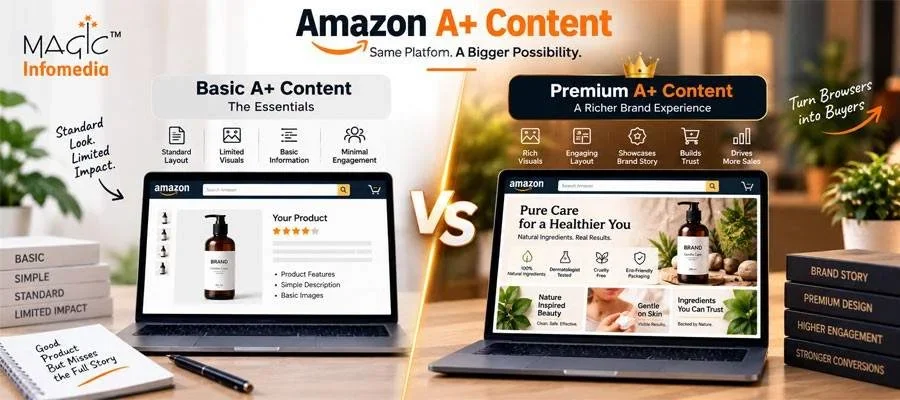
What is the Difference between Basic A+ Content and Premium A+ Content?
Basic A+ Content includes a small pool of static modules. Here’s the real difference-maker in your sales:
Number of modules: Basic A+ Content includes a small pool of static modules.Premium A+ Content gives you access to a much larger set including comparison, video and hotspots modules.
Page space: Premium A+ Content takes up more space on the product detail page, providing more opportunity to inform potential buyers but also adding more content to scroll through.
Interactivity: Basic A+ Content is static, so nothing is interactive. With Premium A+ Content, shoppers can hover, click and watch videos along the way. Accessibility: Basic A+ Content is available immediately to the vast majority of brand-registered sellers. The availability of Premium A+ Content depends on your A+ Content history.
Investment of effort: Premium A+ Content takes more time, better creative assets, and often professional design support to execute well. A poorly designed Premium module can actually hurt more than a clean, simple Basic A+ layout.
Which One Actually Boosts Sales?
This is the question everyone actually wants answered, and the honest response is: it depends on execution, not just the tier.
Industry data indicates that Basic A+ Content can increase conversion by about 3-10% by removing confusions and clarifying trust. Meanwhile, a well-designed Premium A+ Content can boost conversions up to 20%-because interactive content extends the shopping time and preempts any objections to buying before they result in a bounce.
However, the thing about Premium A+ Content is that it only works better if you build it to work. A jumbled video module or a hotspot that doesn’t actually contain any new information can slow shoppers down and take attention away from your core benefits. Basic A+ Content-and optimized pages-still have the ability to beat a bad Premium layout.
In other words: the tier matters less than the strategy behind it. A well-structured product listing optimization plan — clear storytelling, strong lifestyle imagery, and content that answers real customer questions — is what actually drives the sale. Premium A+ Content just gives you more tools to do that job well.
This is exactly the kind of listing strategy work we focus on at Magic Infomedia — helping brands decide not just which A+ tier to use, but how to structure content, imagery, and messaging so the product page itself becomes a conversion engine rather than just a formality.
How to Decide Which One Is Right for Your Brand
- New to Brand Registry? Start with Basic A+ Content. Build a strong foundation before chasing Premium features.
- Already seeing good engagement with standard A+ Content? You’re likely a good candidate to push for Premium A+ Content eligibility.
- Limited design resources? A clean, well-copywritten Basic A+ layout will usually beat a rushed Premium A+ page.
- Competing in a crowded category? Premium A+ Content’s video and comparison modules can be the differentiator that gets you chosen over a nearly identical competitor listing.
Frequently Asked Questions
Q1. Is Premium A+ Content free on Amazon?
Premium A+ Content is generally available to eligible brand-registered sellers without a separate licensing fee, though it requires you to meet specific approval criteria within your A+ Content Manager.
Q2. How do I qualify for Premium A+ Content?
You typically need an approved A+ Brand Story published across your catalog and a track record of approved standard A+ Content submissions. Amazon reviews eligibility on a rolling basis.
Q3. Does Premium A+ Content really increase Amazon sales?
Yes, when designed well. Most shop customers will spend more time browsing when interactive components, such as video and hotspots, are used. As a result, conversion may be increased with interactive content when compared to Basic A+ Content.
Q4. Can I use both Basic and Premium A+ Content on the same listing?
No — once a listing qualifies for Premium A+ Content, it replaces the standard A+ layout rather than running alongside it.
Q5. Is Premium A+ Content worth it for small sellers?
It can be, but only if you have the creative assets and time to build genuinely useful modules. If resources are limited, a strong Basic A+ Content page is often the smarter starting point.
Final Thoughts
What is the Basic A+ vs Premium A+ Content debate not really about which one is “better” – it’s about which one is right for your brand where you’re at right now. Basic A+ Content Brings transparency, trust. Premium A+ Content brings leverage, depth and story.
Whatever the case may be, it’s not the tier that determines the sale, but rather how you write to the customer on the other side of the purchase – the person on the other side of the listing with the phone in hand, deciding whether or not they will trust your brand or give you the next click.