







Shopify powers millions of ecommerce stores worldwide, yet migrating to the platform is rarely as straightforward as it appears. Many businesses expect a quick technical switch. Instead, they encounter ranking drops, missing product data, checkout issues, and revenue disruption.
Shopify store migration is a business-critical process, not a design refresh. It affects customer experience, and backend operations. Without the right planning, even established brands can lose months of growth overnight.
This guide explains what Shopify website migration really involves, highlights the most common Shopify migration challenges, and shows how brands reduce risk when they outsource Shopify migration services to experienced specialists.
1. Why Shopify Store Migration Is Not as Simple as It Looks
At first glance, Shopify appears intuitive. The complexity lies beneath the interface.
A typical migration impacts:
- URL structures and redirects
- Product variants and inventory logic
- Third-party apps and integrations
- Checkout, tax, and shipping rules
A single redirect error can break rankings. One missing metafield can disrupt fulfillment. These risks explain why Shopify store migration requires structured execution rather than quick exports.
2. What Is Shopify Store Migration?
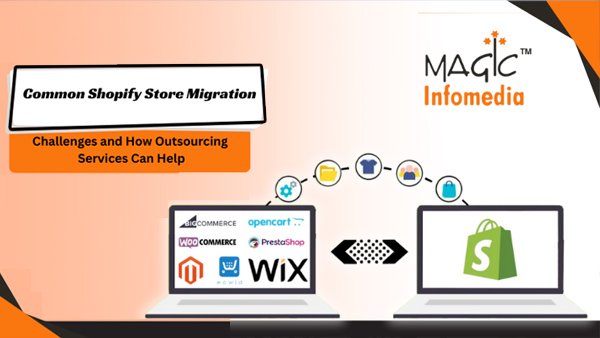
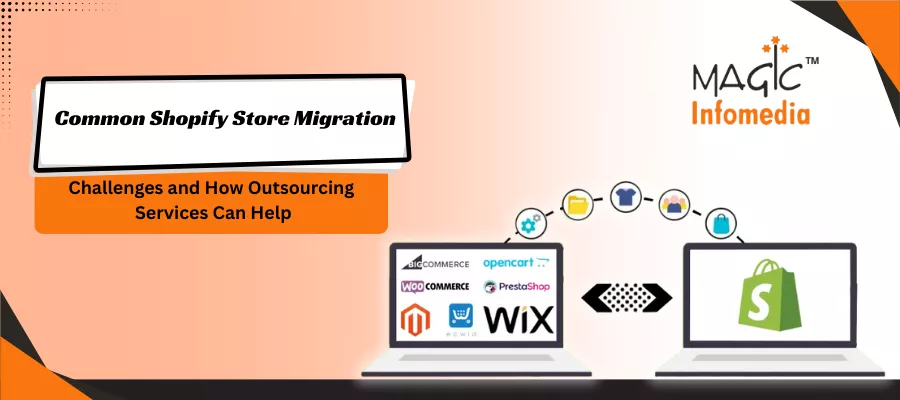
Shopify store migration is the process of transferring an ecommerce store from another platform such as Magento, WooCommerce, BigCommerce, or a custom CMS, into Shopify while preserving performance, data integrity, and search visibility.
A complete Shopify migration service includes:
- Shopify product data migration (products, variants, SKUs, pricing, images)
- Customer and order history transfer
- URL mapping and 301 redirects
- Theme recreation or redesign
- App and integration configuration
A professional Shopify migration service treats migration as a continuity project focused on stability and growth.
3. Common Shopify Store Migration Challenges
1 SEO Traffic Loss
According to industry benchmarks, 30–40% of sites see ranking volatility within the first month after a poorly handled migration.
Why?
- URL changes without proper redirects
- Lost metadata and canonical tags
- Broken internal linking structures
- Uncontrolled indexing
Without a structured Shopify Store migration, search engines struggle to associate the new store with existing authority.
2 Product Data Errors
Shopify handles product structures differently from many platforms. During Shopify product data migration, common issues include:
- Missing variants or attributes
- Incorrect pricing rules
- Inventory mismatches
- Broken product relationships
These problems often surface only after customers begin placing orders.
3 App and Integration Conflicts
Shopify relies heavily on apps rather than plugins or custom modules. During Shopify website migration, businesses often:
- Install overlapping apps
- Miss critical automation
- Add unnecessary scripts that slow performance
This results in bloated stores and rising monthly costs.
4 Checkout and Payment Issues
Shopify checkout is powerful but rigid. Migration mistakes can lead to:
- Incorrect tax calculations
- Shipping logic failures
- Payment gateway errors
Even minor checkout friction can reduce conversion rates significantly.
5 Downtime and Revenue Risk
DIY migrations frequently involve:
- Partial launches
- Broken carts
- Indexing errors
For revenue-driven stores, even brief downtime can cause measurable losses.
4. Why DIY Shopify Migration Often Leads to Problems
1 Limited Migration Experience
Most internal teams migrate once. Migration specialists handle dozens of Shopify projects annually. Experience determines how quickly issues are identified and resolved.
2 Insufficient Testing
DIY projects frequently skip:
- Edge-case checkout flows
- Performance testing under load
Problems emerge after launch, not before.
3 Hidden Long-Term Costs
Short-term savings often result in:
- Emergency SEO recovery work
- Paid traffic replacing lost organic visits
- Extended development fixes
The total cost typically exceeds professional migration fees.
5. How Outsourcing Shopify Migration Services Solves These Challenges
1 Strategic Planning Before Execution
When brands outsource Shopify migration services, the process begins with audits:
- Platform data mapping
- Risk and dependency assessment
Migration does not begin until every variable is documented.
2 SEO-First Migration Framework
A professional Shopify migration service embeds SEO into every stage:
- Full redirect mapping
- Metadata and schema preservation
- Crawl and index control
- Post-launch ranking monitoring
This approach protects visibility and accelerates recovery.
3 Clean and Validated Product Migration
Experts manage Shopify product data migration through:
- Controlled batch imports
- Automated validation checks
- Manual verification of critical SKUs
Product accuracy remains intact after launch.
4 Optimised App Stack
Rather than installing dozens of apps, migration specialists:
- Map required functionality
- Select proven, lightweight solutions
- Avoid performance bottlenecks
Stores remain fast, scalable, and cost-efficient.
5 Controlled Launch and Ongoing Monitoring
Outsourced teams implement staged launches and monitor:
- Traffic and conversion trends
- Indexing behaviour
- Error logs and checkout performance
Issues are resolved before revenue is impacted.
6. When Should You Outsource Shopify Store Migration?
You should strongly consider outsourcing if:
- The store generates consistent revenue
- Organic search drives a large share of sales
- Products have complex variants or rules
- The business operates across regions or currencies
In short, if migration failure would hurt the business, outsourcing is the safer route.
Final Thoughts: Migration Is a Growth Decision
Shopify store migration is not about moving content. It is about safeguarding traffic, trust, and transactions.
Businesses focused on scale benefit from structured planning, expert execution, and ongoing monitoring. A professional Shopify migration service delivers predictability, stability, and confidence throughout the transition.
If you want migration to feel controlled, predictable, and successful, outsourcing is often the smartest move.